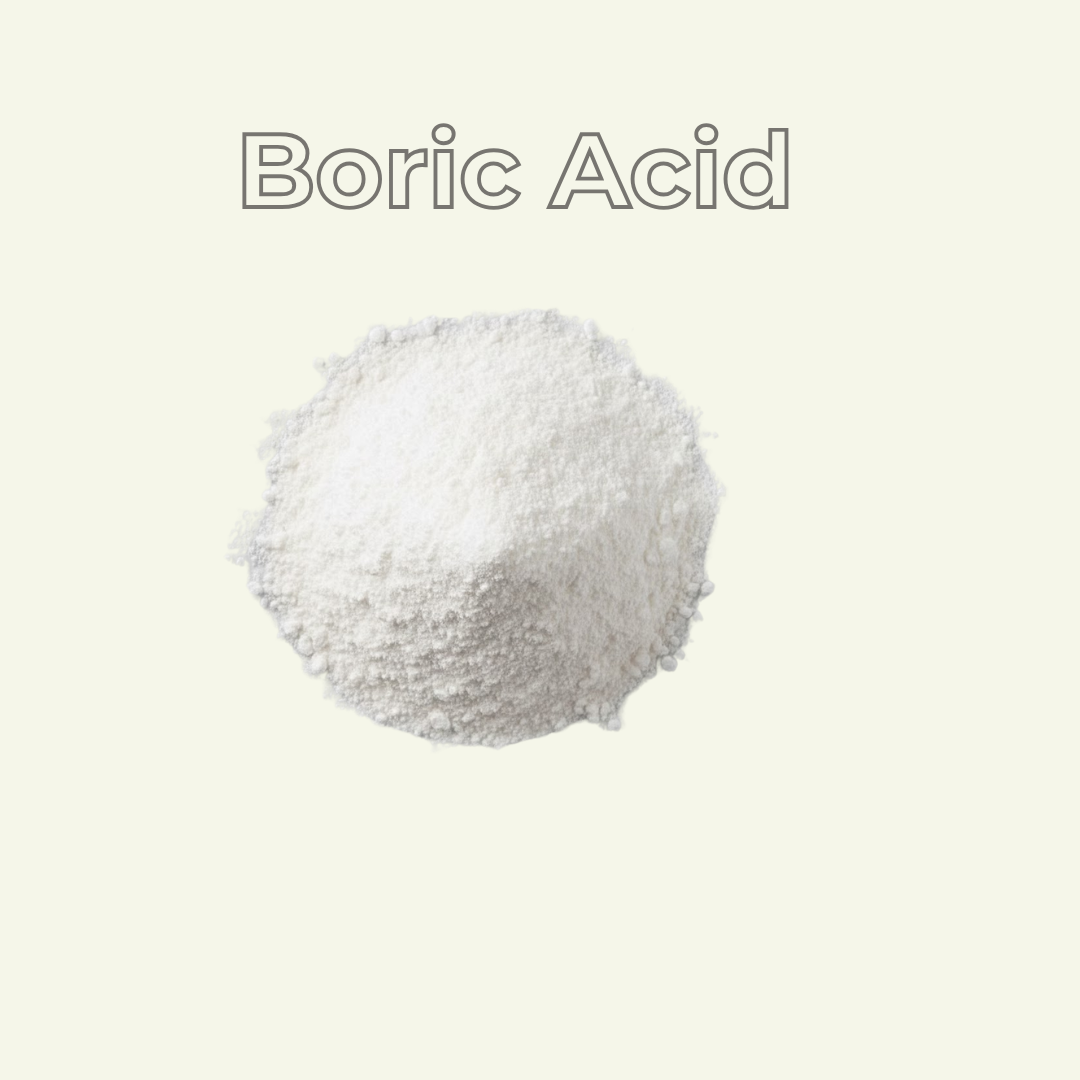
Rchem is a leading supplier of technical and pharmaceutical-grade Boric Acid in Pakistan, providing a reliable and multi-functional chemical for diverse industries. Its ability to form borate esters and its mild acidity make it invaluable in glass and enamel manufacturing, where it enhances thermal and chemical resistance. In personal care, it is used as a buffering agent and mild preservative. Trusted by manufacturers across Karachi, Lahore, and Islamabad, our Boric Acid ensures consistent quality and performance. Rchem is your reliable partner for essential boron compounds.
Key Features & Benefits:
Effective Antiseptic & Fungistat: Used in dilute solutions as a mild eyewash and for topical applications to inhibit the growth of bacteria and fungi. Flame Retardant: Releases water when heated, helping to suppress combustion in cellulose-based materials like wood and textiles. Essential in Glass & Ceramics: Lowers the melting point and thermal expansion of glass, improving its durability and resistance to heat and chemicals. Insecticide & Wood Preservative: Effective against cockroaches, ants, and wood-decaying fungi. pH Buffer & Neutron Absorber: Used to maintain stable pH in various processes and in nuclear power plants as a neutron poison. Cross-linking Agent: Used in the manufacturing of certain polymers and adhesives.
Technical Specifications Table:
Property
Detail
Apperance
White, odorless, crystalline powder or granules
Scent
Odorless
Solubility
Soluble in water, glycerol; slightly soluble in alcohol
Varies widely by application; from <1% in cosmetics to major component in glass batches.
Product Origin
Mined and refined from boron-containing minerals
PALM DERIVATIVES
STATUS
Non-Palm
VEGAN SUITABLE
Yes (Mineral-derived)
Chemical Formulae
H₃BO₃
Frequently Asked Questions:
Is Boric Acid safe for use in personal care products?
In low concentrations, it is approved for use as a preservative and pH adjuster in cosmetics. However, its use is restricted in many regions due to toxicity concerns, especially in products for children or on damaged skin. It is not safe for internal consumption and can be toxic if ingested in significant quantities.
Boric Acid (H₃BO₃) is a chemically distinct, refined compound. Borax (Sodium Tetraborate Decahydrate, Na₂B₄O₇·10H₂O) is a sodium salt of boric acid. While they share some similar properties (e.g., insecticidal), they are different chemicals with different uses and toxicological profiles.
What is the difference between Boric Acid and Borax?
It acts as a stomach poison for insects and also abrades their exoskeleton, leading to dehydration. As a slow-acting poison, it is carried back to the nest by foraging insects, potentially eradicating the entire colony.
How does Boric Acid work as an insecticide?
Boron is an excellent absorber of neutrons. Boric Acid is dissolved in the coolant water of pressurized water reactors (PWRs) to precisely control the nuclear fission reaction by absorbing excess neutrons, thereby acting as a crucial safety measure.
Why is Boric Acid used in nuclear reactors?
Boric Acid is harmful if swallowed, inhaled, or absorbed through damaged skin. It may also affect fertility and is harmful to an unborn child. Personal protective equipment (PPE) including gloves and a dust mask is essential when handling the powder. It should be stored in a tightly closed container in a cool, dry, well-ventilated place. Always refer to the Safety Data Sheet (SDS) for comprehensive safety information.
What are the key handling and storage precautions?