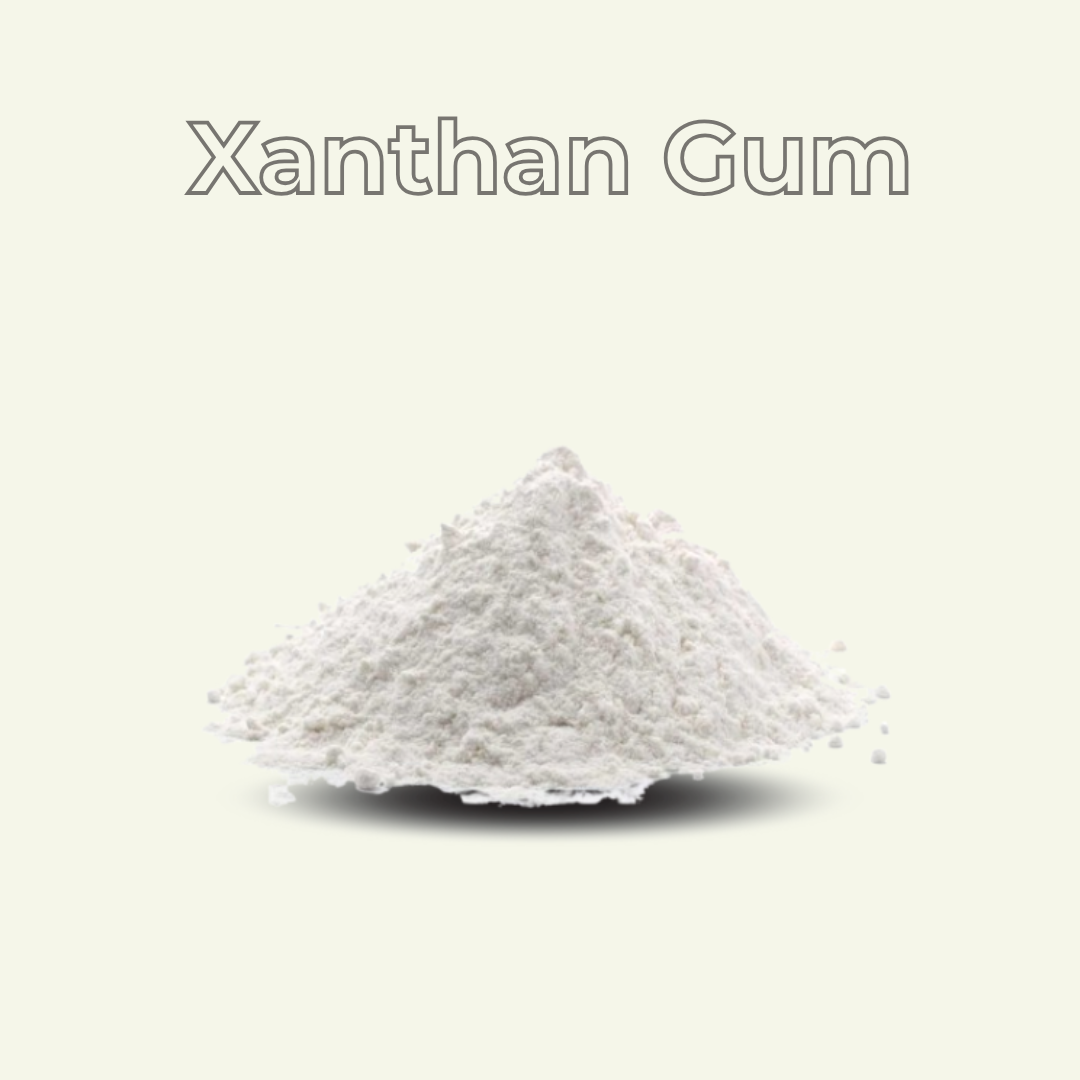
Rchem Xanthan Gum is a high-purity, natural polysaccharide produced through the fermentation of the bacterium Xanthomonas campestris. Presented as a white to cream-colored free-flowing powder, this versatile hydrocolloid is renowned as one of the most effective and versatile rheology modifiers available. It is capable of producing high viscosity at low concentrations, stabilizing emulsions and suspensions, and providing exceptional pseudoplastic (shear-thinning) flow properties, making it an indispensable ingredient across the food, cosmetic, and pharmaceutical industries.
Rchem is a leading supplier of premium-grade Xanthan Gum in Pakistan, providing a critical texturizing and stabilizing solution for a multitude of applications. Our product is characterized by its remarkable stability across a wide range of pH and temperatures, and its strong synergy with other hydrocolloids like guar gum and locust bean gum. It provides suspension for solid particles, prevents oil separation, and creates a pleasant mouthfeel. Trusted by food processors, cosmetic manufacturers, and oilfield service companies across Karachi, Lahore, and Islamabad, our Xanthan Gum ensures your products achieve the desired consistency, stability, and performance. Rchem is your reliable partner for high-performance natural biopolymers.
Key Features & Benefits:
Highly Efficient Thickener: Produces high viscosity in aqueous systems at very low usage levels (typically 0.1% – 1%). Excellent Suspension & Stability: Suspends solid particles (like spices, herbs, and pigments) and prevents the separation of emulsions. Pseudoplastic (Shear-Thinning) Flow: Provides thick viscosity at rest for stability, but thins instantly under shear (shaking, pumping, spreading) for easy application and processing, then thickens again immediately. Stable Under Harsh Conditions: Resists degradation over a wide pH range (2-12) and is stable at high temperatures. Synergistic with Other Gums: Works with guar and locust bean gum to form stronger gels or enhance viscosity. Freeze-Thaw Stable: Helps maintain product integrity through freezing and thawing cycles.
Technical Specifications Table:
Property
Detail
Apperance
White to cream-colored, free-flowing powder
Scent
Odorless
Solubility
Soluble in hot and cold water; insoluble in most organic solvents
How do I dissolve Xanthan Gum without forming lumps?
The key is to disperse the powder aggressively to separate the individual particles before they hydrate. This can be achieved by: Dry Blending: Mixing it with other dry ingredients (like sugar or salt) before adding to water. High-Shear Mixing: Adding the powder slowly to the vortex of rapidly agitated water. Using Alcohol/Glycol: Creating a slurry in a non-solvent like glycerin or oil before adding to the water phase.
While both are thickeners, they have different properties. Xanthan Gum is anionic, provides strong pseudoplasticity, and is very stable to acid, heat, and enzymes. Guar Gum is non-ionic, less pseudoplastic, and can break down at low pH or high temperatures. They are often used together for synergistic viscosity.
What is the difference between Xanthan Gum and Guar Gum?
Yes, Xanthan Gum is approved as a safe food additive (E415) by regulatory bodies worldwide, including the FDA and EFSA. It is widely used in a vast array of food products.
Is Xanthan Gum safe for consumption?
In the absence of gluten, which provides structure and elasticity, Xanthan Gum acts as a binder and stabilizer. It mimics some of gluten's properties by trapping air and providing viscosity, which helps improve the texture, volume, and crumb structure of gluten-free bread and cakes.
Why is Xanthan Gum used in gluten-free baking?
Xanthan Gum solutions are typically hazy or opaque, not crystal clear. If optical clarity is a primary requirement, alternative hydrocolloids like certain grades of Carbomer might be more suitable.