Product: Lauric Acid
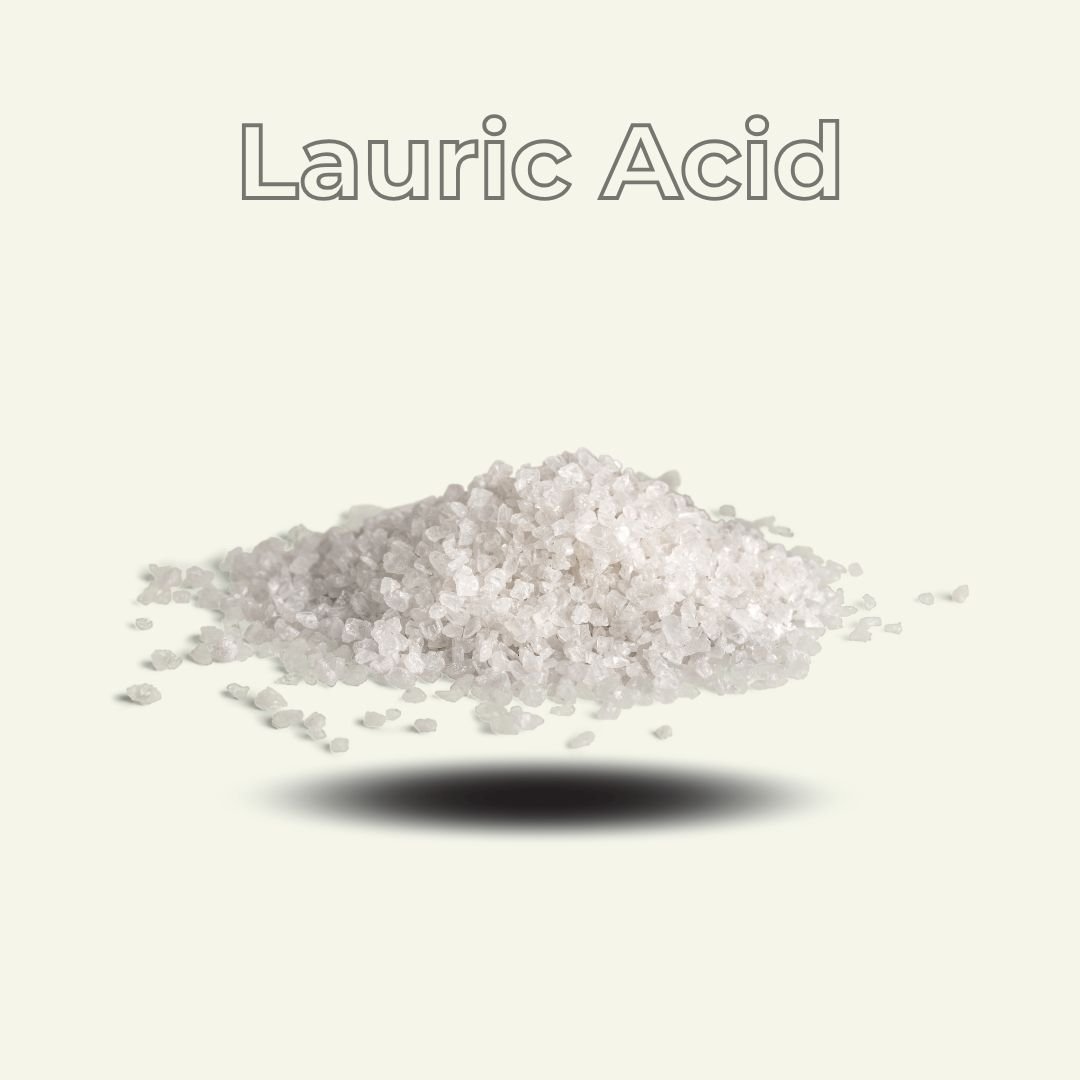
Rchem Lauric Acid is a high-purity, saturated medium-chain fatty acid, presented as a white, crystalline solid or flaked powder. This versatile fatty acid is primarily derived from coconut oil and palm kernel oil, where it occurs naturally at concentrations of approximately 45-55%. Renowned for its exceptional foaming properties, strong antimicrobial activity, and excellent emulsifying capabilities, it is a cornerstone ingredient in soap manufacturing, personal care formulations, and industrial applications requiring a stiff, cleansing lather.
Categories: Emulifiers, Emulsifiers
Category: powder
Description
Key Features & Benefits:
Technical Specifications Table:
Property
Detail
Apperance
Scent
Solubility
Uses
pH
Charge
Used In
Usage Rate
Product Origin
PALM DERIVATIVES STATUS
VEGAN SUITABLE
Chemical Formulae
Frequently Asked Questions:
Why is Lauric Acid so important in soap making?
Lauric Acid is essential in soap making because it directly translates to the cleansing and lathering properties of the finished bar. When saponified with sodium hydroxide (NaOH), sodium laurate is produced, which is the primary soap molecule responsible for: (1) Generating abundant, creamy, stable lather; (2) Providing strong cleansing power to remove dirt and oils; (3) Contributing to bar hardness for longer-lasting soap. Soaps made without sufficient lauric acid will have poor lather and cleansing ability.
These fatty acids contribute different properties to soap: Lauric Acid (C12): High cleansing power; produces large, fluffy, creamy lather; contributes to bar hardness; can be slightly drying. Myristic Acid (C14): Moderate cleansing; produces stable, creamy lather; contributes to bar hardness; less drying than lauric. Stearic Acid (C18:0): Low cleansing; produces stable, fine-bubbled, creamy lather; contributes significantly to bar hardness and longevity; very mild and conditioning. For a balanced soap recipe, formulators typically blend all three to achieve optimal cleansing, lather, hardness, and mildness.
Lauric Acid vs. Myristic Acid vs. Stearic Acid – what are the differences in soap?
Yes. Lauric acid has demonstrated broad-spectrum antimicrobial activity against gram-positive bacteria (including Staphylococcus aureus), certain viruses (including enveloped viruses), and some fungi (including Candida albicans). This is due to its ability to disrupt the lipid membranes of these microorganisms. This property makes lauric acid valuable in acne treatments, antimicrobial soaps, and natural preservative systems, although it should not be relied upon as the sole preservative.
Does Lauric Acid have proven antimicrobial effects?
While lauric acid is generally safe, direct application of pure lauric acid is not recommended as it can be irritating, especially at higher concentrations. In finished cosmetic products, lauric acid is typically incorporated at 1-10% in soaps (converted to sodium laurate during saponification) and 0.5-3% in leave-on formulations. For acne treatment, lauric acid is more effective and less irritating when formulated with other skin-conditioning ingredients.
Can Lauric Acid be used directly on the skin as a treatment?
Handling: Use appropriate personal protective equipment (PPE) including gloves, safety goggles, and protective clothing. Avoid inhalation of dust when handling powdered or flaked forms. Formulation: For soaps, lauric acid is saponified with NaOH or KOH. For emulsions, melt the lauric acid (above 46°C/115°F) and incorporate into the heated oil phase. It is insoluble in water; do not attempt to dissolve directly. Storage: Store in a cool, dry place in tightly sealed containers away from heat sources. Protect from moisture. Shelf life is typically 24-36 months under proper storage. Always refer to the Safety Data Sheet (SDS) for comprehensive handling, safety, and first-aid information.