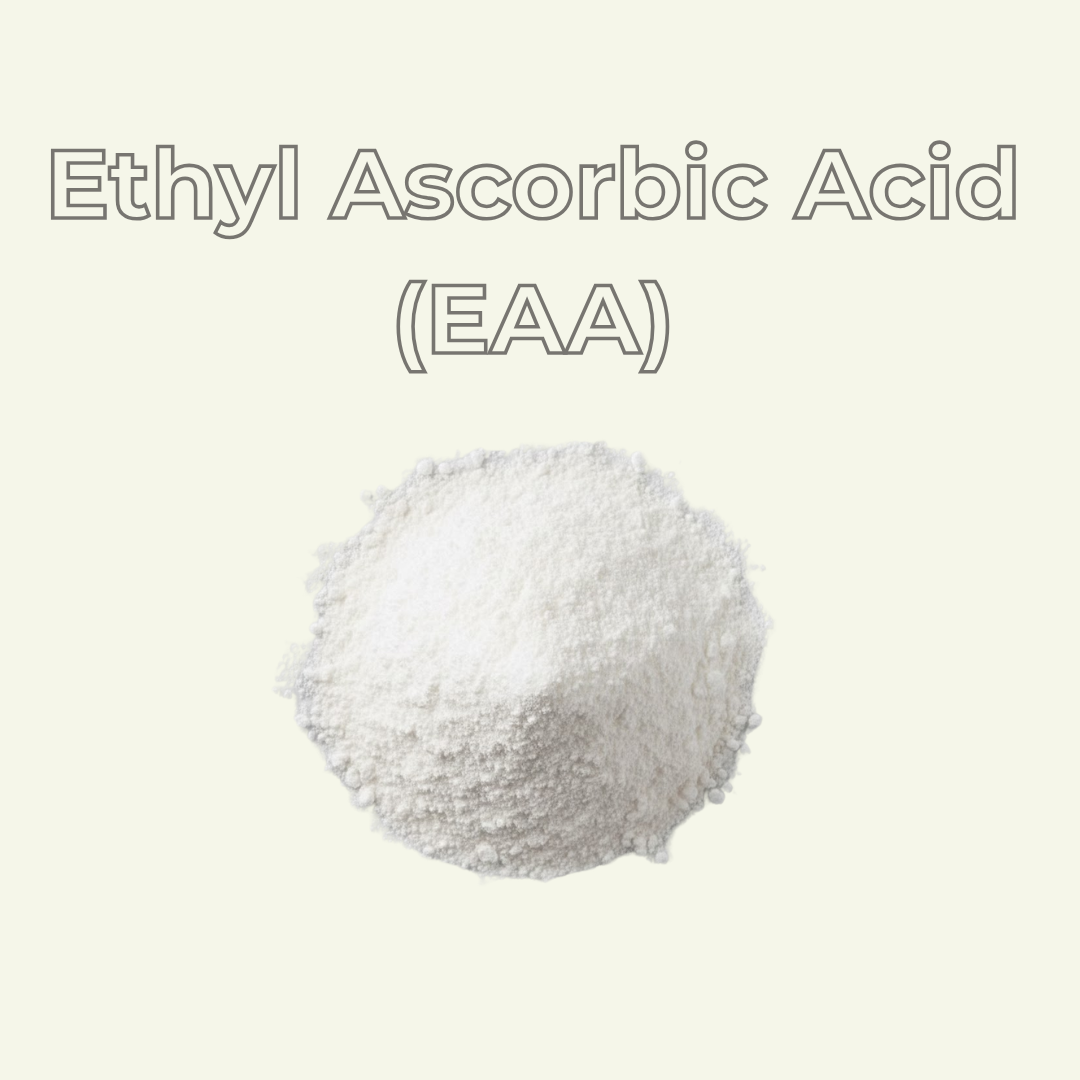
Rchem Ethyl Ascorbic Acid is a highly stable, oil-soluble derivative of Vitamin C, presented as a white to slightly yellow crystalline powder. This advanced form of Vitamin C is engineered to overcome the notorious instability of pure L-Ascorbic Acid while retaining its potent brightening and antioxidant benefits. Its unique lipid-soluble structure allows for enhanced skin penetration and compatibility with oil-based formulations, making it an ideal choice for manufacturers creating high-performance, stable serums, creams, and treatments that target hyperpigmentation, dullness, and photoaging.
Rchem is a leading supplier of premium-grade Ethyl Ascorbic Acid in Pakistan, providing a next-generation solution for stable Vitamin C delivery in cosmetic formulations. Our EAA is synthesized to ensure high purity and efficacy, functioning as a direct precursor to active L-Ascorbic Acid in the skin. It effectively inhibits melanin production and neutralizes free radicals without the sensitivity to light and air that plagues traditional Vitamin C. Trusted by cosmetic brands and manufacturers across Karachi, Lahore, and Islamabad, our Ethyl Ascorbic Acid enables the development of robust, multi-functional products that deliver visible brightening and anti-aging results with superior shelf life. Rchem is your reliable partner for cutting-edge, stable cosmetic actives.
Key Features & Benefits:
Superior Stability: Highly stable against oxidation, heat, and light, ensuring long-term potency and preventing the yellow discoloration common with L-Ascorbic Acid. Potent Skin Brightening: Effectively inhibits the tyrosinase enzyme, reducing melanin synthesis to fade dark spots, sun spots, and post-acne marks for a more even skin tone. Powerful Antioxidant Protection: Neutralizes free radicals generated by UV exposure and pollution, helping to prevent oxidative stress and premature aging. Oil-Soluble & Enhanced Penetration: Its lipid-soluble nature allows for better penetration into the skin’s lipid layers and seamless incorporation into anhydrous and oil-based formulations. Stimulates Collagen Synthesis: Contributes to the production of collagen, helping to improve skin firmness and reduce the appearance of fine lines. Well-Tolerated: Less acidic than L-Ascorbic Acid, making it gentler on the skin and suitable for a wider range of skin types, including sensitive skin.
Technical Specifications Table:
Property
Detail
Apperance
White to slightly yellow crystalline powder
Scent
Characteristic, mild odor
Solubility
Soluble in oils and organic solvents; insoluble in water
How does Ethyl Ascorbic Acid compare to L-Ascorbic Acid?
While L-Ascorbic Acid is the pure, active form, it is highly unstable. EAA is a stable derivative that is converted to L-Ascorbic Acid in the skin. EAA offers superior formulation flexibility (oil-soluble), longer shelf life, and gentleness, though it may be slightly less potent on a molecular equivalency basis than freshly prepared L-Ascorbic Acid.
Due to its oil-soluble nature, it is not directly soluble in water. For water-based serums, it must be solubilized using emulsifiers or delivered through a nano-emulsion system. It is most straightforwardly used in oil phases, anhydrous serums, and emulsions.
Can EAA be used in water-based formulations?
Yes, this is a key advantage. Unlike L-Ascorbic Acid, which requires a low pH (<3.5) for stability and penetration, EAA is effective and stable at a wider, more skin-compatible pH range (up to pH 7), making it easier to formulate with and gentler on the skin.
Is EAA effective at a neutral pH?
Yes, it is highly compatible. Its stability at near-neutral pH makes it an excellent partner for Niacinamide. It can also be used with Retinol, but as with any potent active combination, it is advisable to monitor skin tolerance and ensure the overall formulation is well-balanced to avoid irritation.
Can EAA be combined with other active ingredients like Niacinamide and Retinol?
EAA is one of the most effective and well-researched Vitamin C derivatives. Its key differentiators are its oil solubility, which allows for unique formulation possibilities and enhanced penetration into the lipid layers of the skin, and its exceptional stability, which guarantees product integrity from production to the last use.