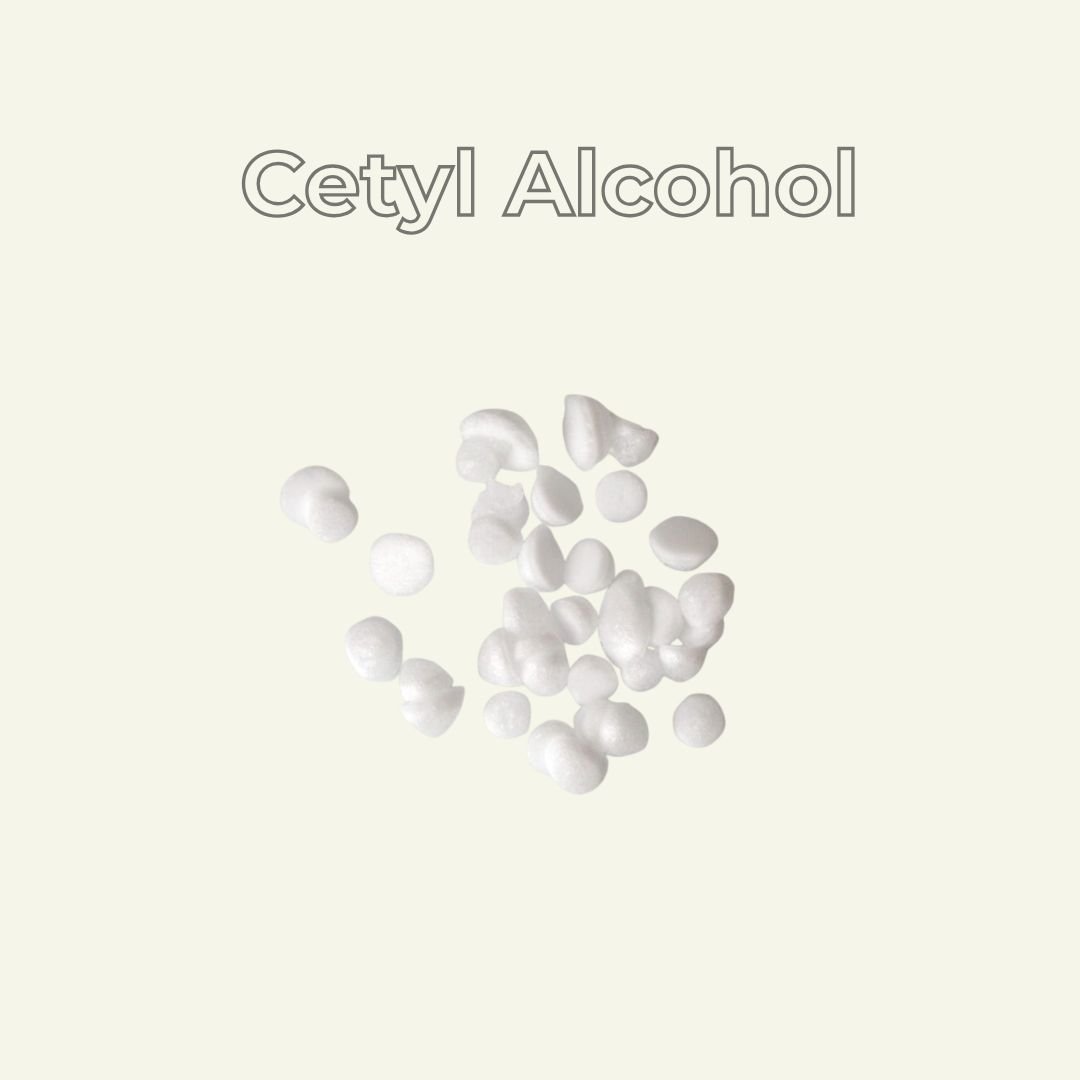
Product: Cetyl Alcohol
Rchem Cetyl Alcohol is a high-purity, long-chain fatty alcohol, presented as white flakes, granules, or a solid wax. Derived from natural fats and oils or produced synthetically, this versatile ingredient is a cornerstone in cosmetic and personal care formulations. While classified as an alcohol, it is non-drying and non-irritating, and serves primarily as a versatile co-emulsifier, opacifier, and emollient. It is essential for creating stable, luxurious emulsions with a rich, velvety texture, making it an indispensable component in a wide array of creams, lotions, and hair conditioners.
Categories: Conditioner For Hair & Skin, Hair Conditioners, Manufacturar
Category: powder
Description
Key Features & Benefits:
Technical Specifications Table:
Property
Detail
Apperance
Scent
Solubility
Uses
pH
Charge
Used In
Usage Rate
Product Origin
PALM DERIVATIVES STATUS
VEGAN SUITABLE
Chemical Formulae
Frequently Asked Questions:
What is the difference between Cetyl Alcohol, Stearyl Alcohol, and Cetearyl Alcohol?
Property Cetyl Alcohol (C16) Cetearyl Alcohol (C16/C18 blend) Stearyl Alcohol (C18) Melting Point ~45-52°C (113-126°F) ~50-55°C (122-131°F) ~55-60°C (131-140°F) Skin Feel Lightest, silkiest, least waxy Balanced, smooth, velvety Richer, more substantive, waxier Viscosity Contribution Moderate Moderate-High Higher Best For Facial creams, light lotions, serums General purpose creams & lotions Rich body butters, heavy creams, ointments Cetyl Alcohol offers the lightest skin feel and is preferred for facial formulations where a non-greasy, silky finish is desired.
No, not as a primary emulsifier. Cetyl Alcohol is a co-emulsifier and emulsion stabilizer, not a primary emulsifier. It cannot produce a stable emulsion on its own because it lacks the hydrophilic head group necessary to significantly reduce interfacial tension. It must be used in combination with a primary emulsifier (e.g., Glyceryl Stearate, Ceteareth-20, Polysorbate 60, or a self-emulsifying base). However, it is an essential co-emulsifier in most O/W creams and lotions, contributing to stability, viscosity, and skin feel.
Can Cetyl Alcohol be used alone as an emulsifier?
Cetyl Alcohol is generally considered to have a low comedogenic rating (typically 0-2 on a scale of 0-5, meaning low to very low potential to clog pores). However, there is some debate in the cosmetic community. Some individuals with highly acne-prone skin report sensitivity to fatty alcohols. The comedogenicity depends on: (1) Purity of the Cetyl Alcohol; (2) Concentration in the final product; (3) Individual skin chemistry. For most users, Cetyl Alcohol is non-comedogenic and non-irritating. Its light, silky feel makes it preferred over Stearyl Alcohol for facial products. For extremely sensitive/acne-prone skin, patch testing is always recommended.
Is Cetyl Alcohol safe for use on oily or acne-prone skin? Can it clog pores?
In hair conditioners, Cetyl Alcohol serves multiple critical functions: (1) Thickening – provides the rich, creamy consistency expected of a conditioner; (2) Emulsion stabilization – stabilizes the conditioner base; (3) Co-emulsifier – helps disperse cationic surfactants (e.g., Behentrimonium Chloride, Cetrimonium Chloride), which are the primary conditioning agents; (4) Lubrication – provides slip and detangling properties; (5) Opacifier – gives the characteristic pearly-white appearance. Compared to Stearyl Alcohol, Cetyl Alcohol provides a lighter conditioning effect, which is preferred for daily-use or fine hair conditioners.
What is the function of Cetyl Alcohol in a hair conditioner?
Handling: Cetyl Alcohol is a waxy solid (flakes/pellets) at room temperature. Use appropriate PPE including a dust mask, gloves, and safety goggles. Avoid inhalation of dust. Formulation (Hot Process): (1) Add Cetyl Alcohol to the oil phase along with other lipophilic ingredients (emulsifiers, oils, emollients); (2) Heat both oil and water phases to 70-75°C (158-167°F) ; (3) Ensure Cetyl Alcohol is fully melted; (4) Proceed with emulsification; (5) Cool slowly with gentle stirring to room temperature. If Cetyl Alcohol is not fully melted, grainy or crystalline textures may result. Troubleshooting: If the final product feels grainy or waxy, ensure the Cetyl Alcohol was fully melted during processing and that cooling was slow with consistent stirring to prevent large crystal formation. Storage: Store in a cool, dry place in tightly sealed original containers. Protect from moisture, extreme heat (below 40°C / 104°F), and direct sunlight. Shelf life is typically 24-36 months under proper storage. Always refer to the Safety Data Sheet (SDS) for comprehensive handling, safety, and first-aid information.