Product: Stearic Acid
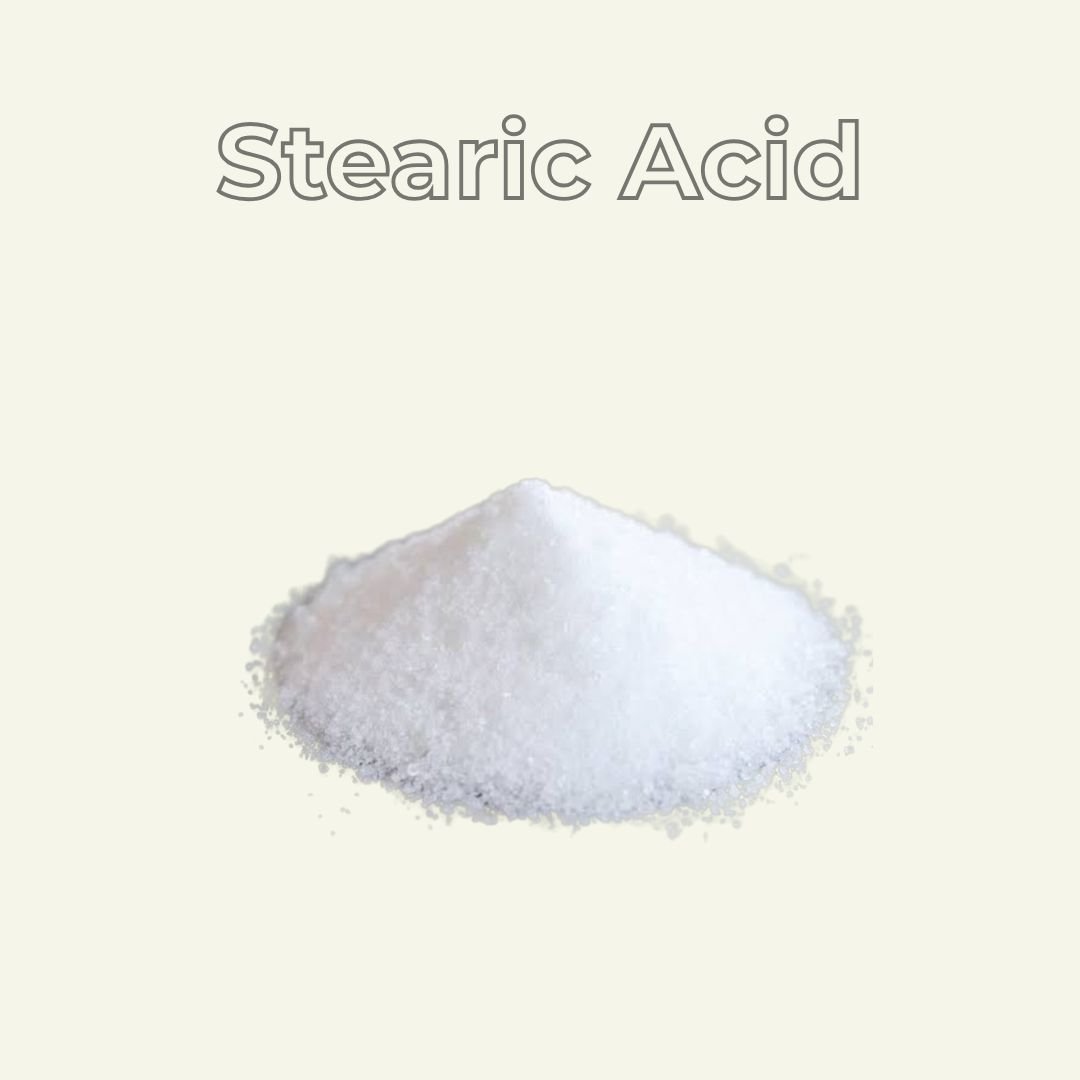
Rchem Stearic Acid is a high-purity, saturated long-chain fatty acid, presented as white waxy flakes, beads, or pastilles. Chemically known as octadecanoic acid (C18:0), it is derived predominantly from natural vegetable oils such as palm, palm kernel, or coconut oil, or from tallow (animal-derived grades available). Renowned for its exceptional thickening, emulsifying, opacifying, and lubricating properties, it is a cornerstone ingredient in the cosmetic, pharmaceutical, and personal care industries for producing stable creams, lotions, soap bars, shaving creams, and ointments with rich, creamy textures.
Categories: Emulifiers, Manufacturar, Wax Emuslifying
Category: powder
Description
Key Features & Benefits:
Technical Specifications Table:
Property
Detail
Apperance
Scent
Solubility
Uses
pH
Charge
Used In
Usage Rate
Product Origin
PALM DERIVATIVES STATUS
VEGAN SUITABLE
Chemical Formulae
Frequently Asked Questions:
What is the difference between Stearic Acid, Cetyl Alcohol, and Cetearyl Alcohol?
This is a common question. These are all fatty alcohols/acids but with different properties: Property Cetyl Alcohol (C16) Cetearyl Alcohol (C16/C18 blend) Stearic Acid (C18 Fatty Acid) Chemical Type Fatty Alcohol Fatty Alcohol Blend Fatty Acid Melting Point ~45-52°C (113-126°F) ~50-55°C (122-131°F) ~55-69°C (131-156°F) Skin Feel Lightest, silkiest Balanced, smooth Rich, waxy, lubricious Thickening Power Moderate Moderate-High High Emulsifier Type Non-ionic Non-ionic Anionic (when neutralized) Soap Making Co-emulsifier only Co-emulsifier only Essential for soap hardness & lather Best For Facial creams, light lotions General purpose creams & lotions Rich creams, soaps, shaving creams Stearic Acid is unique as a fatty acid that, when neutralized with a base (e.g., Triethanolamine, NaOH, KOH), becomes an anionic emulsifier with exceptional stabilizing and thickening properties.
Yes, when neutralized. Stearic acid alone (free acid) is not an emulsifier. However, when neutralized with a base such as Triethanolamine (TEA), Sodium Hydroxide (NaOH), or Potassium Hydroxide (KOH) , it forms a soap (e.g., TEA-Stearate, Sodium Stearate, Potassium Stearate) that acts as a powerful anionic emulsifier. This is a classic, traditional emulsification system used in many creams, lotions, and shaving creams. The neutralization reaction is critical; without it, stearic acid only acts as a thickener and emollient.
Can Stearic Acid be used alone as a primary emulsifier?
Stearic acid is highly valued in soap making because it directly contributes to bar hardness, longevity, and lather quality. When saponified with sodium hydroxide (NaOH), sodium stearate is produced. Sodium stearate is a hard, insoluble soap that: Produces hard, long-lasting bars that do not dissolve quickly in water Generates a rich, creamy, stable, dense lather (compared to laurate soaps, which produce large, fluffy, quick-rinsing lather) Reduces the solubility of the soap bar Imparts a smooth, silky skin feel Most high-quality soap bars contain a blend of lauric (cleansing/lather), myristic (lather/stability), palmitic (hardness), and stearic acids (hardness/creamy lather).
Why is Stearic Acid essential in soap making?
Stearic acid has a moderate comedogenic rating (typically 2-3 on a scale of 0-5, meaning low to moderate potential to clog pores). It is more comedogenic than Cetyl Alcohol (0-2) but less than some heavier oils. In leave-on products (creams, lotions) at typical concentrations (1-5%), stearic acid is generally considered safe for most skin types. However, individuals with highly oily or acne-prone skin may find formulations with high stearic acid content too heavy or potentially pore-clogging. In rinse-off products (soaps, cleansers), comedogenicity is less relevant as the ingredient is washed away. Patch testing is always recommended for acne-prone individuals
Is Stearic Acid safe for use on oily or acne-prone skin? Can it clog pores?
Handling: Stearic acid is a waxy solid (flakes/pellets) at room temperature. Use appropriate PPE including a dust mask, gloves, and safety goggles. Avoid inhalation of dust. Formulation (Creams/Lotions – Neutralized System): (1) Add Stearic Acid to the oil phase; (2) Add the neutralizing base (Triethanolamine, NaOH, or KOH) to the water phase; (3) Heat both phases to 70-80°C (158-176°F) ; (4) Ensure Stearic Acid is fully melted; (5) Slowly add water phase to oil phase with high-shear mixing – the neutralization reaction will occur immediately, forming the TEA-Stearate (or other stearate) emulsifier; (6) Continue mixing while cooling. Formulation (Soap Making): (1) Melt Stearic Acid with other fats/oils; (2) Add lye solution (NaOH or KOH) to saponify. Troubleshooting: If the final product feels grainy or waxy, ensure the Stearic Acid was fully melted during processing and that the neutralization reaction was complete. Storage: Store in a cool, dry place in tightly sealed original containers. Protect from moisture, extreme heat (below 40°C / 104°F), and direct sunlight. Shelf life is typically 24-36 months under proper storage. Always refer to the Safety Data Sheet (SDS) for comprehensive handling, safety, and first-aid information.