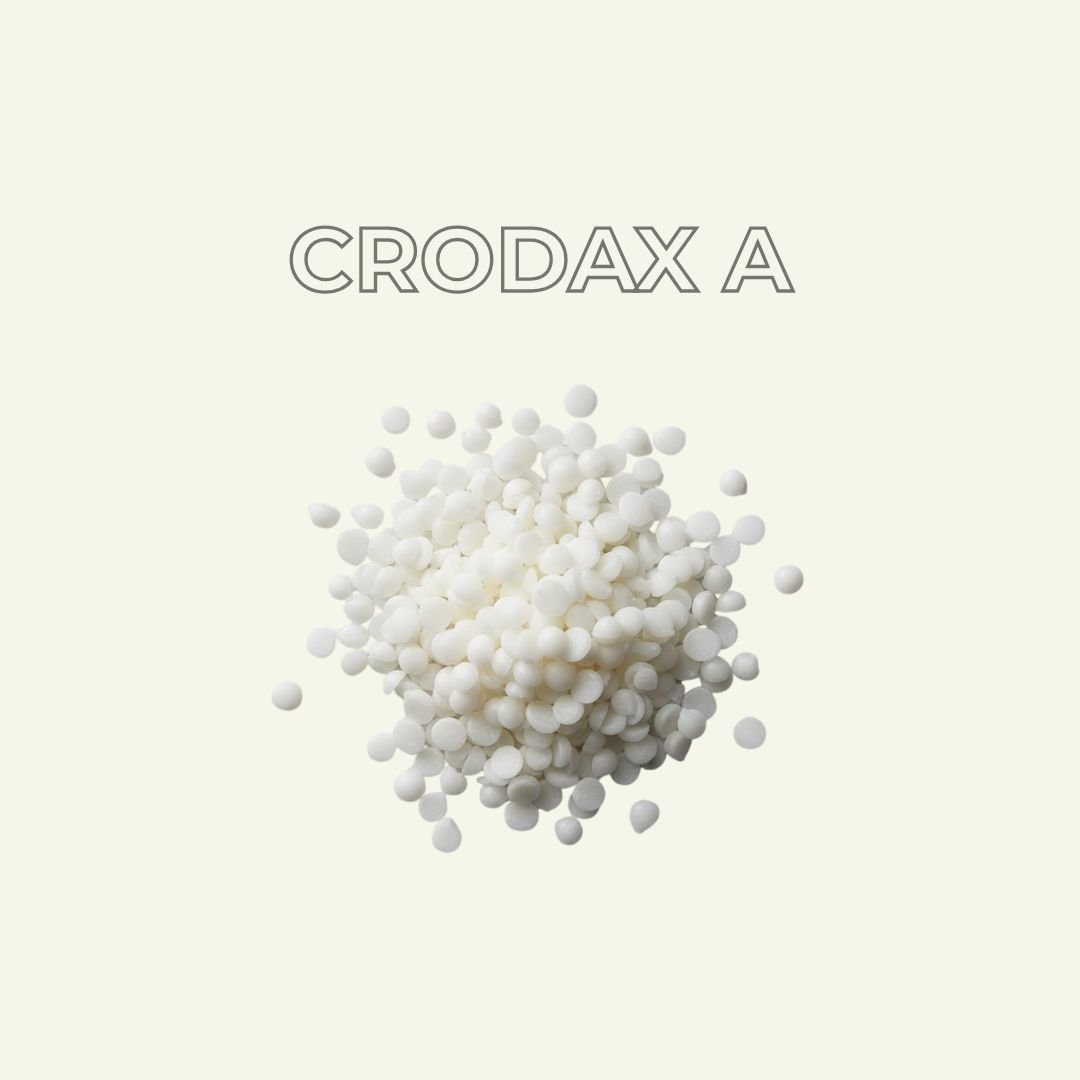
Product: Crodax A
Rchem Crodax A is a high-purity, synthetic, long-chain branched hydrocarbon ester, typically presented as a clear, colorless to pale yellow, low-viscosity liquid. It is a highly refined isoparaffin or specialty emollient ester produced by Croda, known for its exceptional spreading properties, dry silky after-feel, and excellent compatibility with a wide range of cosmetic ingredients. Renowned for its ability to reduce the greasiness of oils and impart a lightweight, non-occlusive feel, it is a cornerstone ingredient in high-performance skin care, color cosmetics, and sun care formulations requiring elegant sensory profiles.
Categories: Emulifiers, Wax Emuslifying
Category: powder
Description
Key Features & Benefits:
Technical Specifications Table:
Property
Detail
Apperance
Scent
Solubility
Uses
pH
Charge
Used In
Usage Rate
Product Origin
PALM DERIVATIVES STATUS
VEGAN SUITABLE
Chemical Formulae
Frequently Asked Questions:
What exactly is Crodax A, and what makes it different from other emollients like Caprylic/Capric Triglycerides (MCT oil)?
Crodax A is a specialty, long-chain branched hydrocarbon ester or isoparaffin. In contrast, MCT oil is a triglyceride (glycerin + two medium-chain fatty acids). This structural difference gives Crodax A its unique properties: (1) Exceptional spreadability – it covers skin more efficiently than MCT; (2) Ultra-dry, non-greasy finish – MCT can feel slightly oily; Crodax A feels velvety and powdery; (3) Very low viscosity – thinner than almost all natural oils; (4) Non-occlusive – does not feel heavy on skin. It is often used to "lighten" other oils and create dry-touch formulations.
Crodax A is highly valued in sunscreens and color cosmetics for several reasons: (1) Solvent for UV filters – effectively dissolves organic UV filters (Avobenzone, Octocrylene, OMC) without crystallization; (2) Pigment dispersant – helps disperse pigments evenly for better coverage and color payoff; (3) Water resistance – contributes to the water-resistant properties of sunscreens and long-wear foundations; (4) Dry feel – prevents sunscreens from feeling sticky or greasy; (5) Lightweight texture – allows for high SPF formulations with elegant, wearable textures.
Why is Crodax A so popular in sunscreen and color cosmetics formulations?
As a synthetic hydrocarbon, Crodax A is not considered a natural ingredient under most natural certification standards (ECOCERT, COSMOS, NATRUE). However, it is generally well-regarded in "clean beauty" and "safe synthetic" segments because it is: (1) Non-comedogenic; (2) Non-irritating; (3) Non-sensitizing; (4) Highly purified; (5) Does not contain ethoxylation or other controversial processing. For strict natural formulations, alternatives like Squalane, Hemi-squalane, or Coco-Caprylate/Caprate may be preferred. For high-performance conventional or hybrid formulations, Crodax A remains an excellent choice.
Is Crodax A suitable for natural or "clean beauty" formulations?
Yes, Crodax A is ideal for oily and acne-prone skin because: (1) It is non-comedogenic (does not clog pores, typical rating 0-1 on a 0-5 scale); (2) It has a dry, powdery finish that does not add visible shine; (3) It is non-occlusive (does not trap heat or sebum); (4) It spreads beautifully without feeling heavy. Its lightweight, dry feel makes it a favorite for oil-control serums, mattifying primers, and gel-creams designed for combination and oily skin types.
Can Crodax A be used on oily or acne-prone skin? Is it comedogenic?
Handling: Crodax A is a low-viscosity liquid and is easy to pump and handle at room temperature. Use appropriate PPE including gloves and safety goggles. Formulation: Add Crodax A to the oil phase of emulsions. It can be used as a complete replacement for heavier oils or as a co-emollient (1-15%) to lighten textures. For anhydrous systems (serums, oils), blend it with other emollients and actives. It is compatible with silicones, natural oils, esters, and organic UV filters. Storage: Store in a cool, dry place in tightly sealed containers, protected from light and heat. Shelf life is typically 24-36 months under proper storage. Always refer to the Safety Data Sheet (SDS) for comprehensive handling, safety, and first-aid information.