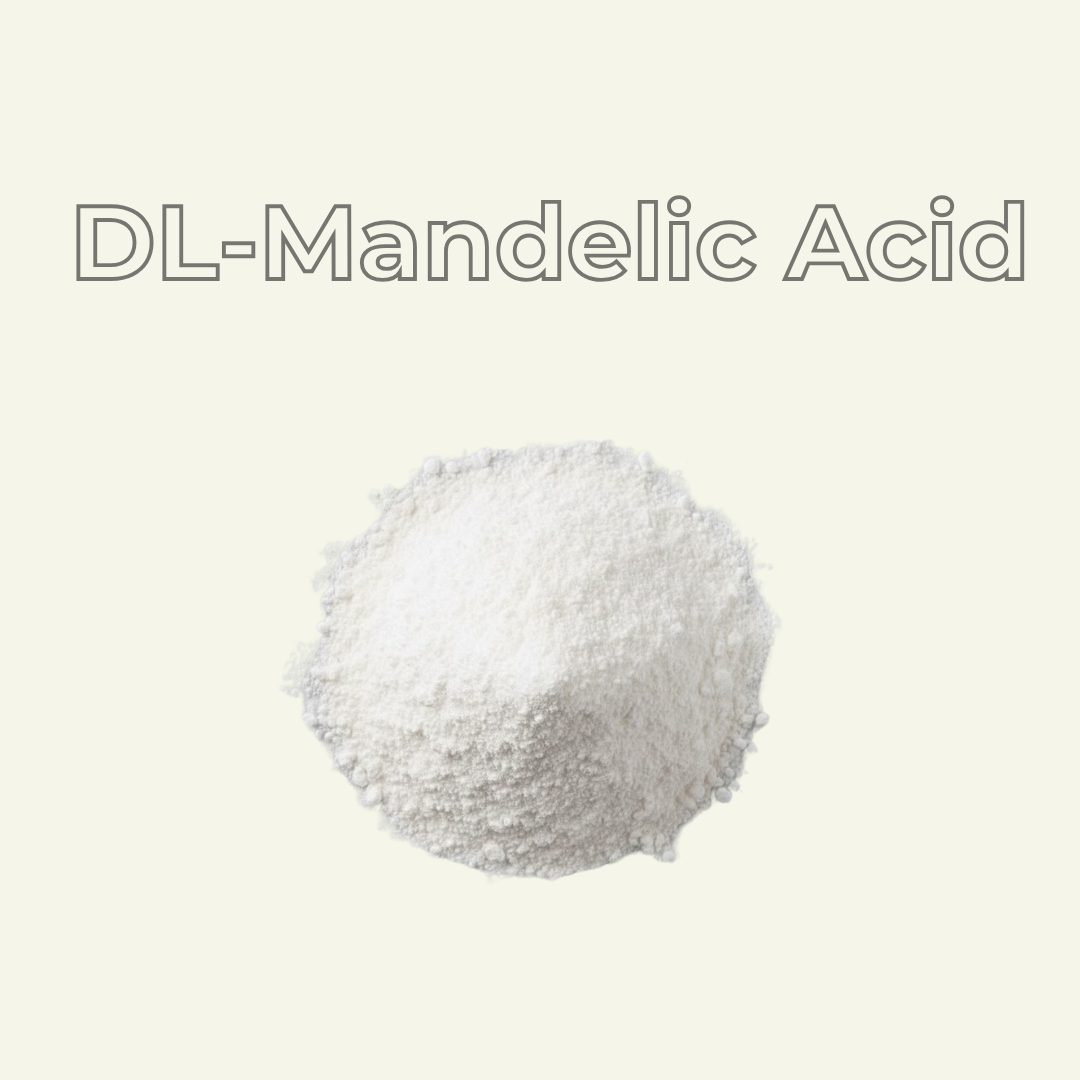
Rchem DL-Mandelic Acid is a high-purity, alpha-hydroxy acid (AHA) derived from bitter almonds, presented as a white to off-white crystalline powder. This unique AHA features a large molecular size and a lipophilic benzene ring, which allows for gentle, slow penetration into the skin. Renowned for its effective exfoliating, antibacterial, and brightening properties, it is a cornerstone ingredient for treating acne, hyperpigmentation, and photoaging, and is particularly suitable for sensitive and rosacea-prone skin types that may not tolerate other AHAs.
Rchem is a leading supplier of premium-quality DL-Mandelic Acid in Pakistan, providing a reliable and gentle yet effective active for a wide range of skincare formulations. Our product is valued for its versatility and mildness; its large molecule size provides a gradual release of activity, minimizing irritation while effectively loosening the bonds between dead skin cells, fighting acne-causing bacteria, and inhibiting melanin production. Trusted by manufacturers across Karachi, Lahore, and Islamabad, our DL-Mandelic Acid ensures your cleansers, toners, serums, and peels deliver visible clarity, smoothness, and radiance without compromising skin comfort. Rchem is your trusted partner for sophisticated, well-tolerated chemical actives.
Key Features & Benefits:
Gentle Exfoliation: As a large-molecule AHA, it penetrates the skin slowly, providing effective desquamation of dead skin cells with a lower risk of irritation, redness, and stinging compared to glycolic acid. Potent Anti-Acne Agent: Possesses inherent antibacterial activity against Cutibacterium acnes, helping to reduce breakouts and clarify the complexion. Effective Skin Brightener: Inhibits the tyrosinase enzyme, helping to fade hyperpigmentation, sun spots, and post-acne marks for a more even skin tone. Ideal for Sensitive Skin: Its gentle nature makes it the AHA of choice for sensitive skin, including skin prone to rosacea and melasma. Anti-Aging & Smoothing: Promotes cell renewal and collagen production, helping to improve skin texture, reduce the appearance of fine lines and wrinkles, and enhance overall radiance. Lipophilic Properties: Its oil-soluble characteristic allows it to penetrate effectively into the sebum-filled pores, providing exfoliating benefits both on the surface and within the pore lining.
Technical Specifications Table:
Property
Detail
Apperance
White to off-white crystalline powder
Scent
Characteristic, faint odor
Solubility
Soluble in water, alcohol, and glycols.
Uses
Gentle exfoliant, anti-acne agent, skin brightener, anti-aging active
pH
Acidic (Formulations typically pH 3.5-4.2 for leave-on products)
Charge
Non-ionic
Used In
Facial cleansers, toners, serums, chemical peels, creams for acne & hyperpigmentation, sensitive skin formulations
Usage Rate
≥ 99%
Product Origin
Synthetic (identical to the compound found in nature)
PALM DERIVATIVES
STATUS
Palm-Free
VEGAN SUITABLE
Yes (Synthetic, non-animal origin)
Chemical Formulae
Frequently Asked Questions:
What makes Mandelic Acid gentler than Glycolic Acid?
The key difference is molecular size. Glycolic acid has the smallest molecule of all AHAs, allowing for very fast and deep penetration, which can cause significant irritation. Mandelic Acid's large molecule penetrates the skin slowly and gradually, providing a milder, more controlled exfoliation that is less likely to cause side effects.
Yes, it is an excellent choice for melasma. Its gentle exfoliating and brightening actions are effective for managing this condition, which is often worsened by irritation (a phenomenon known as post-inflammatory hyperpigmentation). Its low irritation profile makes it a safer option for long-term use on melasma-prone skin.
Is DL-Mandelic Acid suitable for treating melasma?
Yes. While it was first isolated from bitter almonds, the commercial ingredient used in cosmetics is produced synthetically and does not contain any almond-derived proteins that trigger allergic reactions. It is considered safe for use by individuals with nut allergies.
Can Mandelic Acid be used by individuals with a nut allergy?
The "DL" prefix refers to the racemic mixture of the two enantiomers (D-form and L-form) of the molecule. The naturally occurring form is primarily L-Mandelic Acid, but the synthetic DL mixture is most commonly used in cosmetics and is equally effective. This distinguishes it from the single-isomer versions.
Why is it called "DL-Mandelic Acid"?
Store in a cool, dry place in a tightly sealed container. It is a solid acid, so it must be dissolved in the water phase of a formulation. When creating leave-on products, the final pH should be adjusted to between 3.5 and 4.2 for optimal efficacy and tolerance. Standard personal protective equipment (PPE) like gloves and a dust mask is recommended when handling the powder. Always refer to the Safety Data Sheet (SDS) for comprehensive handling information.
What are the key handling and formulation considerations?